The Net Zero by 2030 mandate often feels like an impossible mountain for the average parish to climb.
“The Thermal Sanctuary is a shift in philosophy: Heat the person, not the space.”
Traditional heating systems in historic buildings are effectively ecological disasters in stone—massive amounts of energy are pumped into the rafters, heating the air six feet above our heads while the people in the pews remain frozen.
The Strategy: Personal vs. Planetary
If we want to reach a younger audience, we have to address the endurance factor.
A generation used to climate-controlled workspaces and heated car seats shouldn’t have to treat a visit to a church like a survival exercise.
| Feature | Traditional Heating | The Thermal Sanctuary |
| Target | The entire volume of the air. | The individual human body. |
| Efficiency | High waste; heat rises to the ceiling. | Zero waste; heat stays where it’s needed. |
| Wait Time | Hours (or days) to pre-heat. | Instant on/off. |
| Carbon Impact | Massive fossil fuel consumption. | Highly efficient, electricity-based. |
The Guide: Modular Comfort Solutions
Turning a church into a thermal sanctuary requires a layered approach.
By using modular technology, a parish can implement these changes incrementally without a massive construction project.
1. Under-Pew Infrared (IR) Heaters
Unlike traditional radiators, infrared heaters don’t heat the air; they emit radiant heat that warms the objects and people directly in front of them.
-
The Benefit: It feels like the warmth of the sun on a spring day.
-
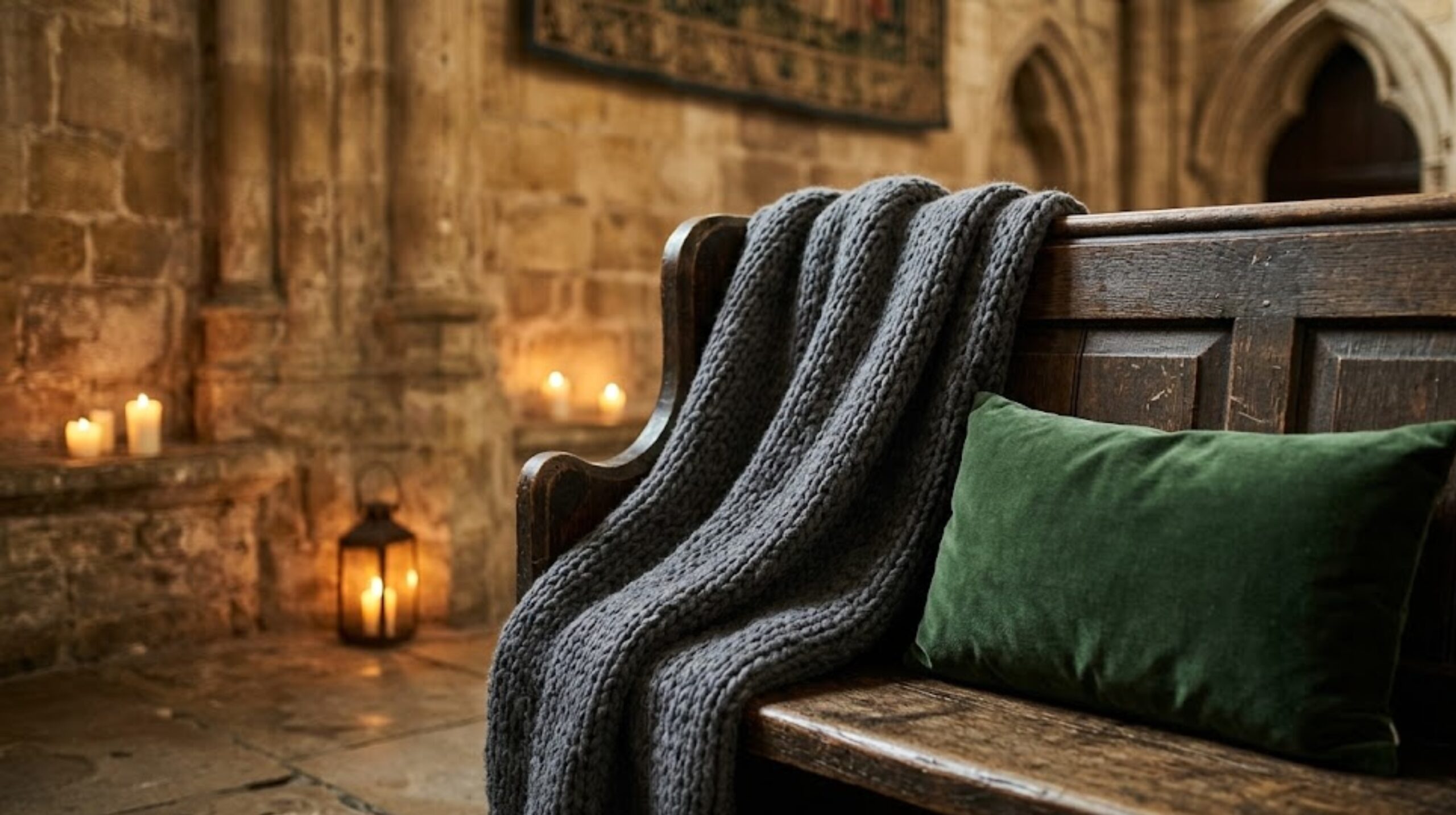
The Design: These are often slim, dark panels that can be discreetly mounted under pew seats or on floorboards, remaining nearly invisible to the eye while keeping the lower body warm.
2. Heated Seat Cushions
Technology has caught up with the frozen oak problem. Modern, rechargeable, or hard-wired heated cushions provide direct contact heat.
-
The Benefit: Keeping the core and lower body warm is the most effective way to prevent the shiver response.
-
The Design: High-quality fabrics in deep, atmospheric tones (charcoal, forest green, or ochre) transform a hard bench into a curated piece of furniture.
3. The Textile Layer: Sanctuary Blankets
There is a profound psychological comfort in textiles.
Offering high-quality, heavy-weight wool or fleece blankets at the entrance is a simple, low-tech way to signal care.
-
The Benefit: It creates a nesting effect, allowing visitors to settle in and stay for an hour rather than rushing out.
-
The Design: Avoid the hospital look. Think oversized, textured weaves that look like they belong in a high-end design magazine.
The Wrap Up
For centuries, the cold church was seen as a badge of honour, a sign of asceticism and endurance. But in 2026, it is simply a barrier.
By creating a Thermal Sanctuary, we solve two problems at once:
-
The Environmental Solve: We stop the financial and carbon leak of trying to heat medieval air. We align with the planet by only using the energy required for the people actually present.
-
The Human Solve: We remove the social friction caused by physical discomfort. When a space is physically warm, it becomes emotionally welcoming. It allows the visitor to stop thinking about their toes and start thinking about the silence.
Would a busy person walk or drive on a cold Tuesday night to sit in a draughty building? Unlikely.
Would they make the journey to sit on a heated cushion, wrapped in a heavy wool blanket, surrounded by warm golden light and atmospheric sound? Yes. Because that isn’t just an event; it’s a sanctuary.
“When we stop trying to force ancient stone to behave like a modern office building, we find a more sustainable, more comfortable middle ground.”
*Imagery co-created with AI
Subscribe to our free newsletter
Updates from our Exeter studio on our craft, theology, and the art of slowing down.
* We respect your inbox as much as your privacy. View our privacy policy here.