It’s 2:00 AM, the house is quiet, and a big question hits you…
What is the point of this? How do I forgive someone who isn’t sorry? What happens next?
Naturally, we reach for the phone.
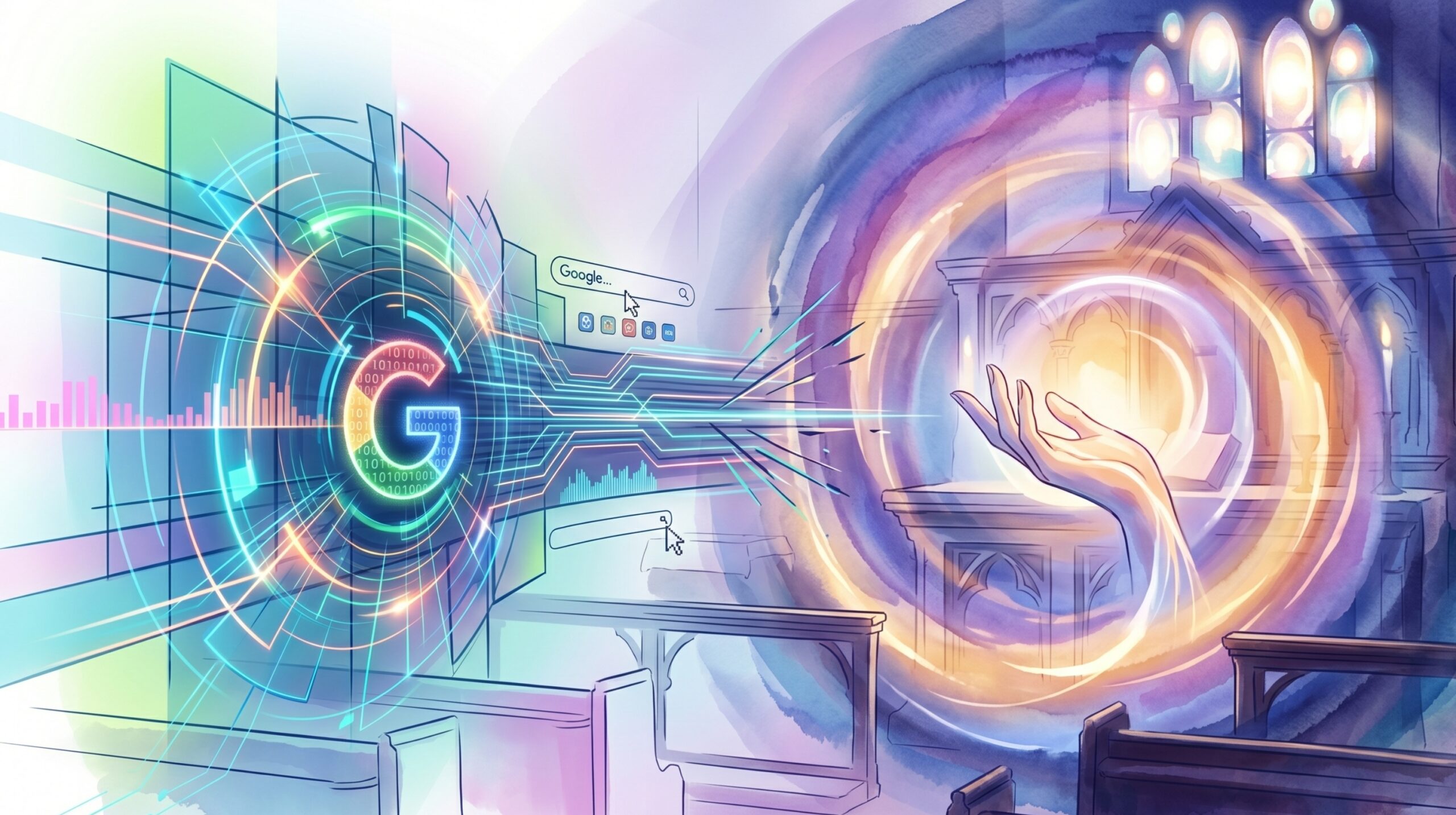
We ask Google. We ask an AI. We seek a digital consensus.
And while the internet is brilliant at giving you a recipe for sourdough or the history of the Devon hedge, it is remarkably poor at providing sanctuary.
The big questions of life usually don’t require more data; they require depth.
Google doesn’t just fail to give you peace; it tries to extract it, package it, and serve it back to you in 30-second clips (that are usually monetised).
The Problem with Instant Answers
1. The Click Illusion (Depth vs. Speed)
Digital answers provide what psychologists call The Click Illusion—the false sense of mastery that comes from seeing a summary.
When an AI or a search engine gives you a Big Answer in three seconds, it feels like knowledge, but it’s actually just data.
True wisdom can’t be downloaded; it has to be lived, earned, and sat with.
2. The Noise Factor (Signal vs. Static)
Digital search is inherently noisy.
Every result is competing for your attention with ads, sidebars, and prompts.
-
The Static: Four million results don’t give you clarity; they give you Decision Fatigue. When you search for the meaning of life online, you aren’t finding a signal; you’re just adding to the static.
-
The Sanctuary Signal: A church building is the ultimate low-noise environment. Its architecture—the high-vaulted ceilings and the sacred space of the nave are designed to filter out the clutter. In a church, the signal-to-noise ratio is perfect because the noise of the world is physically locked behind a heavy oak door.
3. The Human Friction of the Stone Giant
Google is friction-less, which is why it feels hollow. Seeking an answer in a physical building requires human interaction.
-
The Sensory Anchor: You have to feel the weight of the heavy brass handle as you pull open the door. You have to smell the sharp, cold scent of damp limestone and the lingering incense.
-
The Weight of Presence: An algorithm doesn’t care if you find peace; it just wants you to click the next link. A priest or a 600-year-old wall doesn’t move. They provide a grounded presence that says: Stay here. Don’t scroll. Just be.
The Perspective of Time
A priest stands in a lineage. A church building stands in a landscape.
They remind you that your current crisis is part of a much longer story.
That perspective is something an algorithm—which lives entirely in the now—simply cannot grasp.
“Some answers cannot be found on a screen; sometimes, they have to be found, in silence, in thought and in prayer.”
*Imagery co-created with AI
Subscribe to our free newsletter
Updates from our Exeter studio on our craft, theology, and the art of slowing down.
* We respect your inbox as much as your privacy. View our privacy policy here.