
If you asked a hundred people walking down a high street to define the word church, ninety-nine of them would point toward a specific building.
They’d picture a stone tower, a drafty aisle, a collection of old hymn books, and a general atmosphere of polite, quiet behavior.
For decades, we’ve treated the church as a noun—a fixed geographical location where you go to consume a religious service on a Sunday morning before returning to real life.
But if you look at the foundation of the movement, defining a church by its masonry is like defining a family by its bricks and mortar. It completely misses the point.
The original word used in the ancient text wasn’t a description of architecture at all. It was Ekklesia.
The Original Blueprint: The Assembly
In ancient Greece, an ekklesia wasn’t a temple.
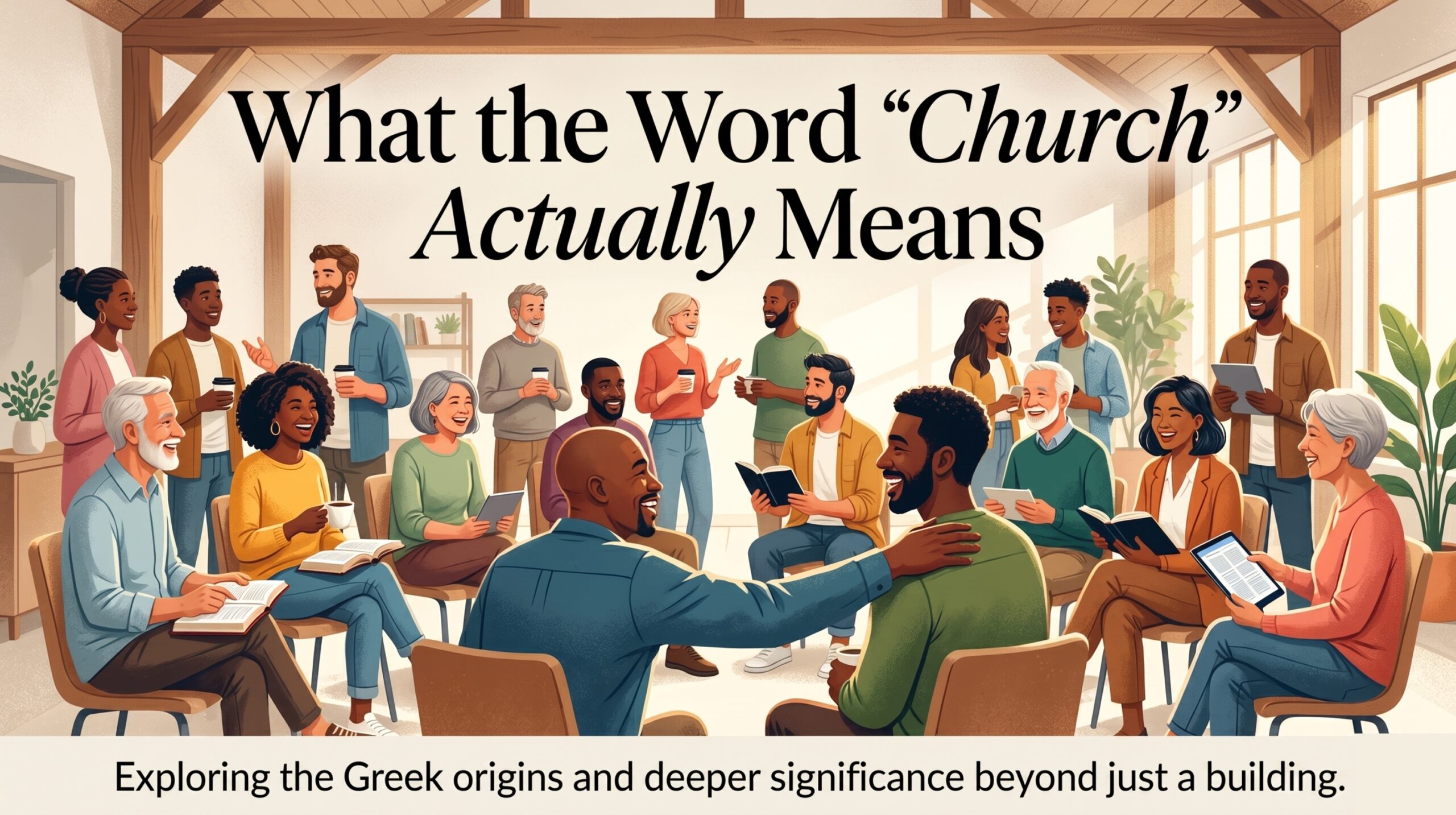
It was a public assembly of citizens who were called out from their private homes into the public square to look each other in the eye, debate, solve problems, and take responsibility for the health of their city.
When the early mavericks of the movement adopted that specific word, they were staging a massive conceptual rebellion. They were explicitly saying: Our movement is not a temple. It is a gathering of people.
The humanity is the architecture.
When we lose sight of this, the building stops being a tool for the community and starts becoming a museum to be maintained.
We get caught up in the low-functioning bureaucracy of property management—worrying about dry rot, spreadsheets, and churchwarden schedules—while the actual structural fabric of human connection starts to fray.
What a Church Actually Is (The Three Core Pillars)
A church isn’t a place you go to look at a stage; it is a community that functions on three distinct, deep layers:
-
1. A Shared Identity and Purpose: At its core, it is a group of people who have decided to align their lives around a shared blueprint—the teachings, the grace, and the counter-cultural life of Jesus. It’s a collective agreement that love, justice, and truth are the highest priorities, and that we are responsible for the well-being of the people around us.
-
2. The Social Fabric (Real Lifeline Support): It is the direct, high-quality interaction between neighbours. A church is happening when a group of people organises a youth hub to support teenagers through stressful life transitions; when someone cooks a meal for a family in crisis, or when someone simply serves a proper cup of coffee to an isolated neighbour after a rough week to prove that someone actually cares they exist. It is a safety net built out of human relationships.
-
3. The Public Sanctuary: Yes, the historic stone buildings and cathedrals matter immensely—but they matter because they are free, public, un-commodified spaces owned by the community. In a world where every single space expects you to buy something, a church is one of the last remaining places where you can sit for two hours in absolute silence, escape the digital noise, and think without anyone asking for a credit card. It is a physical anchor for the neighbourhood’s soul.
The Real Architecture
The real church doesn’t require stained glass, robes, or complex committees to exist.
Wherever people gather in honesty, support one another through the mess of daily life, and extend real kindness to the broken—the church is actively happening right there.
It isn’t a monument to the past; it is a living, breathing network of human care.
“If you take the people away, a cathedral is just a breath-taking hollow shell of stone and glass. Beautiful, but empty.”
*Imagery co-created with AI
Subscribe to our free newsletter
Updates from our Exeter studio on our craft, theology, and the art of slowing down.
* We respect your inbox as much as your privacy. View our privacy policy here.