
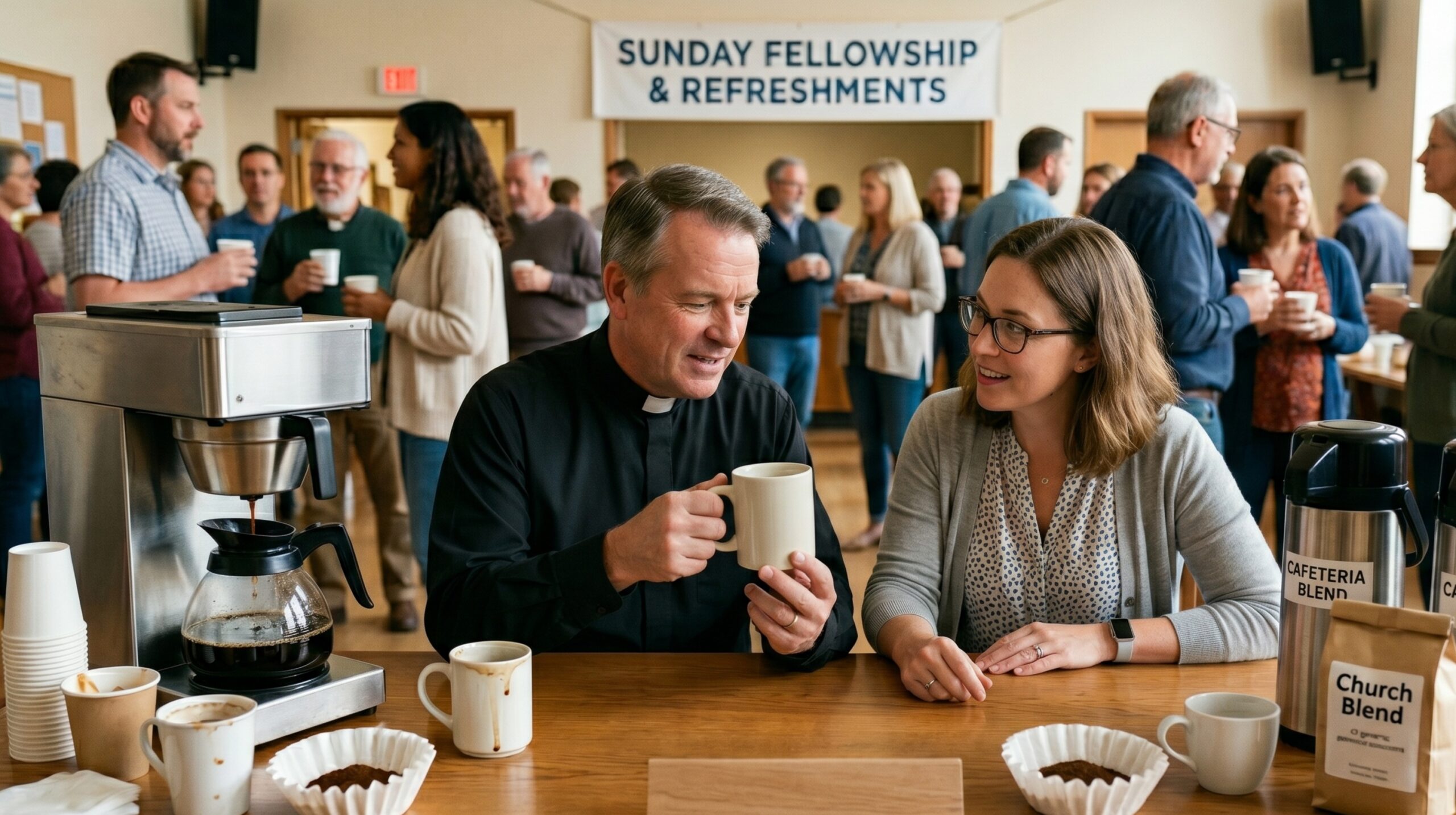
Let’s be radically honest. If you want a masterclass in psychological endurance, skip the gym and head straight to the back of a church hall at 11:15 AM on a Sunday.
There, sitting on a folding table covered in a plastic tablecloth, is the ultimate test of human resolve: the parish coffee station.
We talk a lot about making churches more relatable and welcoming to the local community.
We invite people into our sanctuary, we pen beautifully worded sermons but that experience falls completely flat the moment a newcomer is handed a lukewarm mug of freeze-dried instant decaf that tastes suspiciously like disappointment.
It’s time for a forensic audit of the parish brew.
The Current Offenders
If your local church refreshment setup features any of the following, it may be worth a rethink:
-
The 1990s Catering Urn: A giant, whistling aluminium cylinder that doesn’t boil water so much as it holds it hostage. It emits a low, menacing hum that can be heard over the final blessing and leaves the water tasting faintly of copper and ancient history.
-
The Powdered Milk Conundrum: A substance that defies the laws of physics. It refuses to dissolve, choosing instead to form tiny, defensive islands on the surface of your tea, mocking your desire for a simple morning beverage.
-
The Exposed Biscuit Plate: A melancholy pyramid of plain digestives and economy bourbon creams, left to brave the elements since 9:30 AM. By the time you reach them, they have absorbed the ambient dampness of the building and achieved the status of stale.
Why Hospitality is a Modern Asset
This isn’t just about being fussy over caffeine.
In 2026, the coffee culture is big business. People look for quality, and more importantly, they look for comfort.
When a church serves terrible coffee, it sends an unintentional signal: We are stuck in the past, and we aren’t really expecting you to stay.
Post-service coffee shouldn’t be treated as an administrative chore to be rushed through by a reluctant volunteer using leftovers from the summer fete.
It is the most critical window of the morning. It is the space where the magic actually happens—where a lonely neighbour builds up the courage to chat, or a young family decides if they ever want to walk back through those doors.
If you want people to stick around, share wisdom, and support each other, you have to give them a reason to stand by the hatch.
The Easy Upgrade
Fixing this doesn’t require a diocese-level budget restructure. It just requires a shift in pride.
Ditch the instant granules.
Partner with a local roastery down the road. Dust off a couple of simple cafeteria presses, buy some proper fresh milk, and invest in biscuits that don’t disintegrate on impact.
When the coffee smells incredible, the atmosphere changes. It stops feeling like a chore and starts feeling like an asset.
It tells the community that the church respects their time, their tastebuds, and their presence.
“Excellent hospitality isn’t superficial; it’s proof that you are awake, alive, and ready to welcome the world.”
*Imagery co-created with AI
Subscribe to our free newsletter
Updates from our Exeter studio on our craft, theology, and the art of slowing down.
* We respect your inbox as much as your privacy. View our privacy policy here.