We all know the look: the subtle wince that ripples through a room when someone mentions the “B” word—budget.
In a rural parish, the conversation around money often feels like a binary choice between a frantic bake sale and selling off the family silver.
But the truth here is that our ancient buildings are asset-rich and cash-poor stone giants.
“To keep the doors open, we have to move beyond a survival mindset and toward a new kind of stewardship—one that honours the sacred silence while actually paying the bills.”
It’s time to move past the merchants in the temple fear and talk about quiet revenue: income that respects the sanctuary whilst ensuring its future.
1. The Acoustic Vault: High-Design Recording Space
-
The Concept: Renting the chancel or a side chapel as a recording space for acoustic musicians, podcasters, or choirs.
-
The Reason: Churches were built for sound before microphones existed. The natural reverb is something a digital plugin can’t truly replicate.
-
The Peace Check: Recording requires absolute silence. There are no calls, no shouting—just the music. It’s the most respectful use of the space possible.
-
The Income: High-end hourly rates for local folk artists or “ASMR” creators who want that authentic stone-and-wood resonance.
2. The Mindfulness Studio: Pilates in the Pews
-
The Concept: Using the open space at the back of the church or the nave for low-impact, silent movement classes like Yoga, Pilates, or guided meditation.
-
The Reason: People in rural areas often have to drive 30 minutes to a sterile gym. Doing a sunset yoga session under a Gothic window is a completely different experience.
-
The Peace Check: No loud music, no shouting. It’s about breath and alignment. It fits perfectly with the Living Sanctuary vibe.
-
The Income: A percentage of the class fee. It brings in a younger, wellness-conscious demographic who might otherwise never cross the threshold.
3. The Ancestry Hub: Genealogy for the Rootless
-
The Concept: Offering a paid, curated Roots Research service.
-
The Why: Rural churchyards are data goldmines. People from across the globe travel to graveyards to find a name on a weathered headstone.
-
The Spin: Don’t just point them to a dusty book. Offer a Heritage Package: a well-designed map of their ancestors’ graves, a rub of the monumental brasses, and a 30-minute session with a local historian (or a knowledgeable volunteer).
-
The Income: A flat fee for the Search Package. It utilises the knowledge of the priest and the history of the building without changing the furniture.
4. The Wildcard: The Boutique Honesty Pantry
-
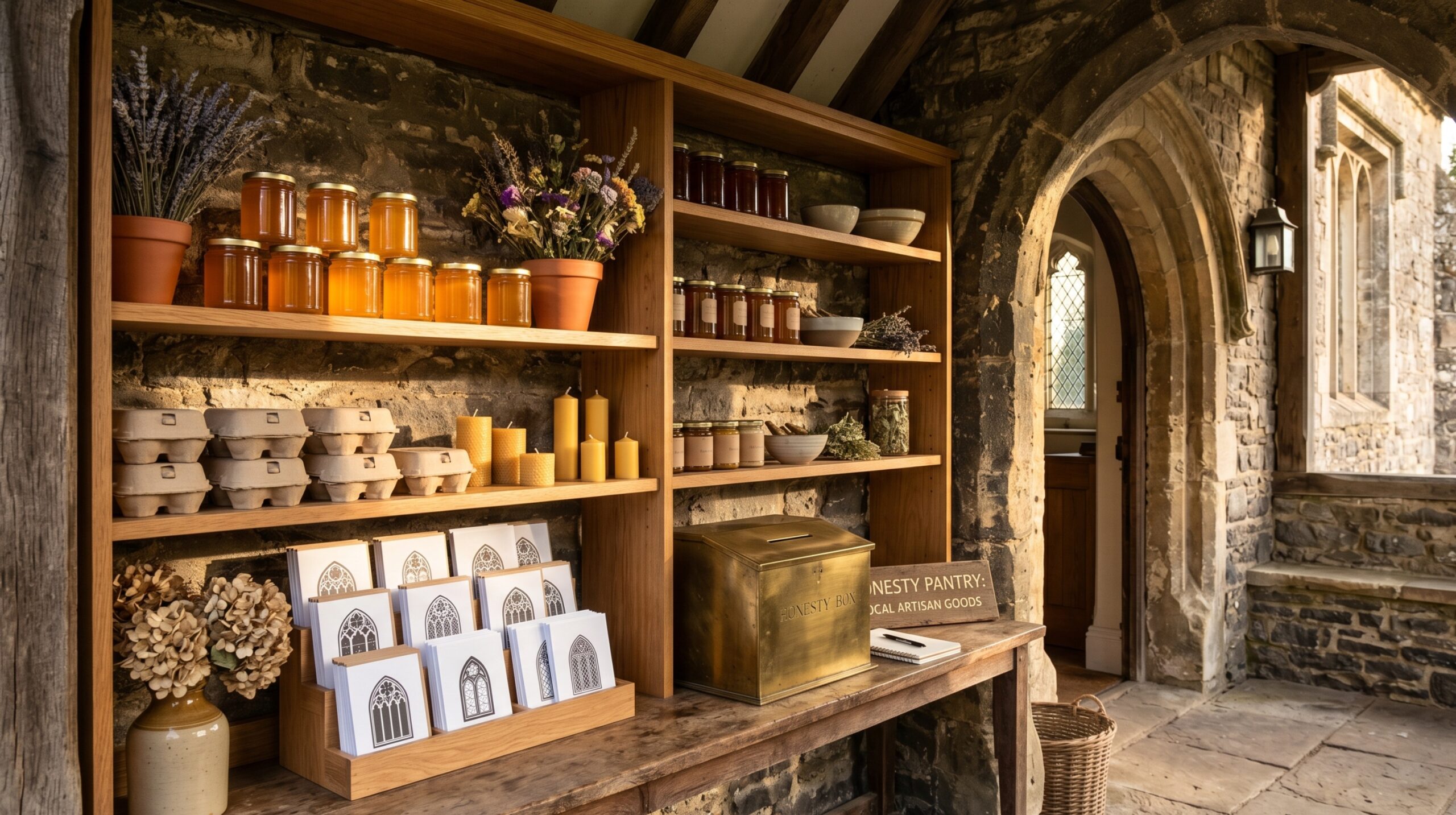
The Concept: A high-end, unstaffed larder in the porch selling local artisan goods—honey, eggs, greeting cards, local botanicals and more.
-
The Why: Village shops are disappearing. A small, beautifully designed honesty shop provides a service to the community.
-
The Peace Check: It’s self-service. It’s quiet. It’s a slow commerce model.
-
The Income: A commission on local goods sold.
Stewardship, Not Sales
Generating income doesn’t have to mean turning the church into a noisy marketplace.
In fact, when done with thought and care, these ideas reinforce the church’s role as the common room of the village.
Whether it’s providing the perfect reverb for a local musician or helping a visitor trace their roots back through the centuries, these models are about adding value to the community.
By utilising these types of ideas, we aren’t selling out; we are ensuring that the building remains a sanctuary for another hundred years.
“The best way to protect the peace is to make sure we can afford to keep the lights on for anyone who needs to find it.”
*Imagery co-created with AI
Subscribe to our free newsletter
Updates from our Exeter studio on our craft, theology, and the art of slowing down.
* We respect your inbox as much as your privacy. View our privacy policy here.