
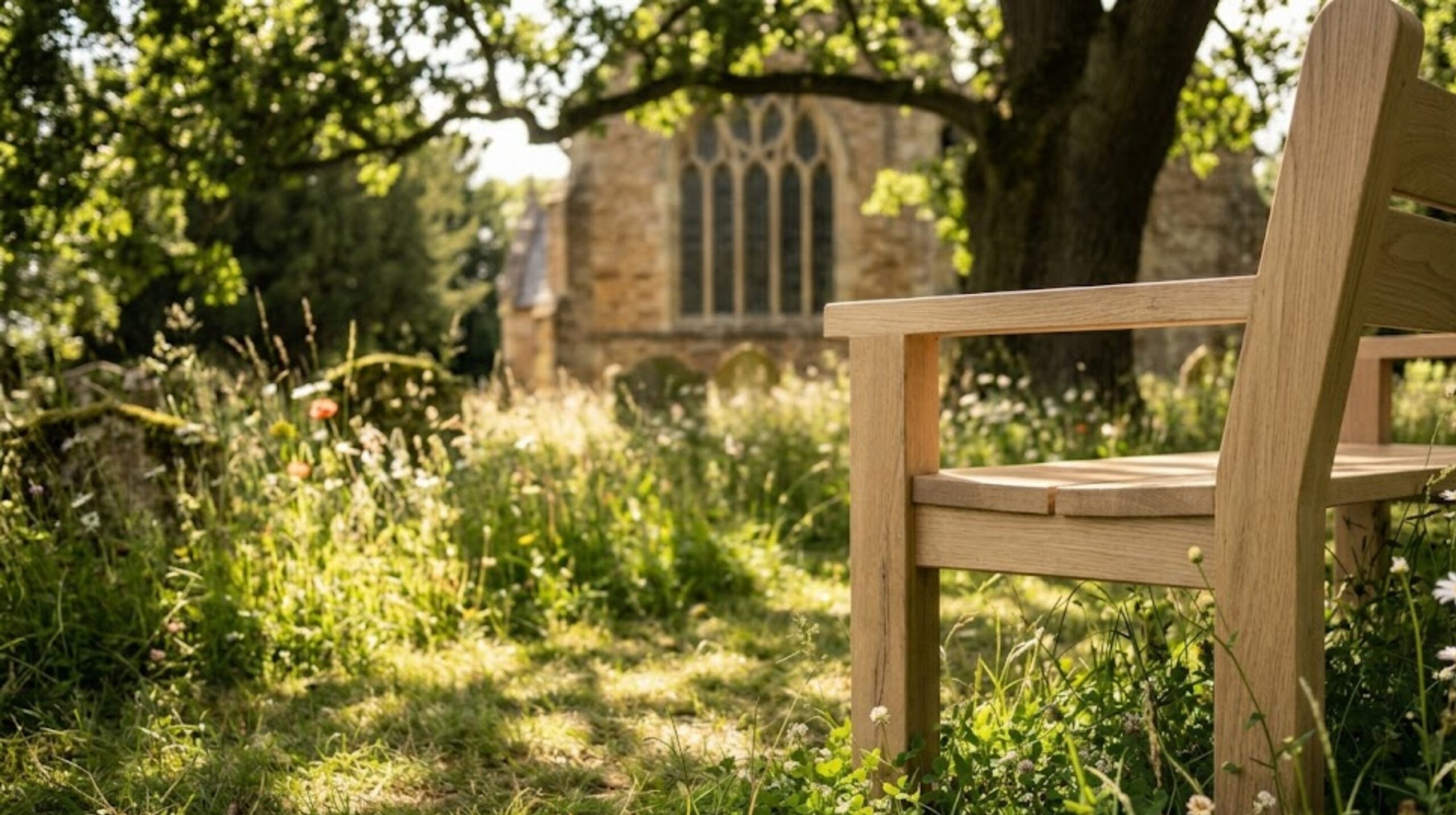
When we think of church gardens or a churchyard there is a mental barrier—a sense that it is a place for the dead, a transition zone, or a “look but don’t touch” museum of Victorian headstones.
“The Green Cathedral is about moving your welcome from inside the church to the outside.”
It is the realisation that before someone is ready to commit to your flock and step under a stone archway, they might just need a place to sit on a Tuesday afternoon and hear the wind in the trees.
Curating the Outdoor Sanctuary
Reclaiming this space doesn’t require a massive landscaping budget.
It requires High-Design, Low-Complexity interventions that signal a single message: You are welcome to be here.
1. Wildflower Management:
Allowing sections of the churchyard to return to a meadow state is cheaper, better for local biodiversity, and creates a visual wildness that feels alive rather than manicured.
2. Minimalist Benches:
Position two or three high-quality, contemporary wooden benches in the sunniest spots.
Avoid the traditional memorial aesthetic; choose sleek, ergonomic designs that invite a person to stay for an hour, not just a minute.
3. Pocket Meditations:
Create weather-proof plaques or small wooden signs.
Place them near the seating areas with single, bold prompts. No instructions or churchy jargon—just a line of text that encourages a moment of reflection.
From Place for the Dead to a Breathing Space
In the over-subscribed reality of 2026, many people don’t have access to a private garden or a quiet park.
The churchyard is often the only green “lung” in a neighbourhood.
By intentionally curating the outdoors, we solve three problems at once:
-
The Entry Barrier: It lowers the social friction of visiting a church. You don’t have to go inside to benefit from the space.
-
The Spooky Factor: Modernising the furniture and allowing nature to thrive, shifts the perception from a cemetery to a habitat.
-
The Digital Fatigue: It provides a physical destination for a screen-break that feels high-quality and curated, rather than just a patch of grass.
Some people will always find churchyards slightly uncomfortable. We’ve been conditioned to see them as places of endings, but we need to change that narrative.
The Green Cathedral works because it reclaims the land for the living.
When a busy freelancer or a parent on a school run sees a wildflower meadow and a modern bench, the death association fades. It becomes a social hub for the quietest kind of community—the kind that shares a space without the pressure to perform or explain why they are there.
“If we want people to trust the building, we have to let them trust the land it sits on first.”
*Imagery co-created with AI
Subscribe to our free newsletter
Updates from our Exeter studio on our craft, theology, and the art of slowing down.
* We respect your inbox as much as your privacy. View our privacy policy here.